Weekend Food For Thought
On today's menu: Humanoid Robotics, What Happens When You Use AI to Make an Entire Organization More Productive?, Power of Human Ingenuity and The Sun, The Power of "Writing to Think" and more...

Hello from Lisboa,
I hope you had an interesting and productive week.
Ezra Pound stated that: “Genius is the capacity to see ten things where the ordinary man sees one.”
May you find an array of perspectives below…
1 Getting Visual
2 If You Read One Thing Today - Make Sure it is This
3 Consequential Thinking about Consequential Matters
4 Big Ideas
5 Big thinking
6 The Rent is Due
1 Getting Visual
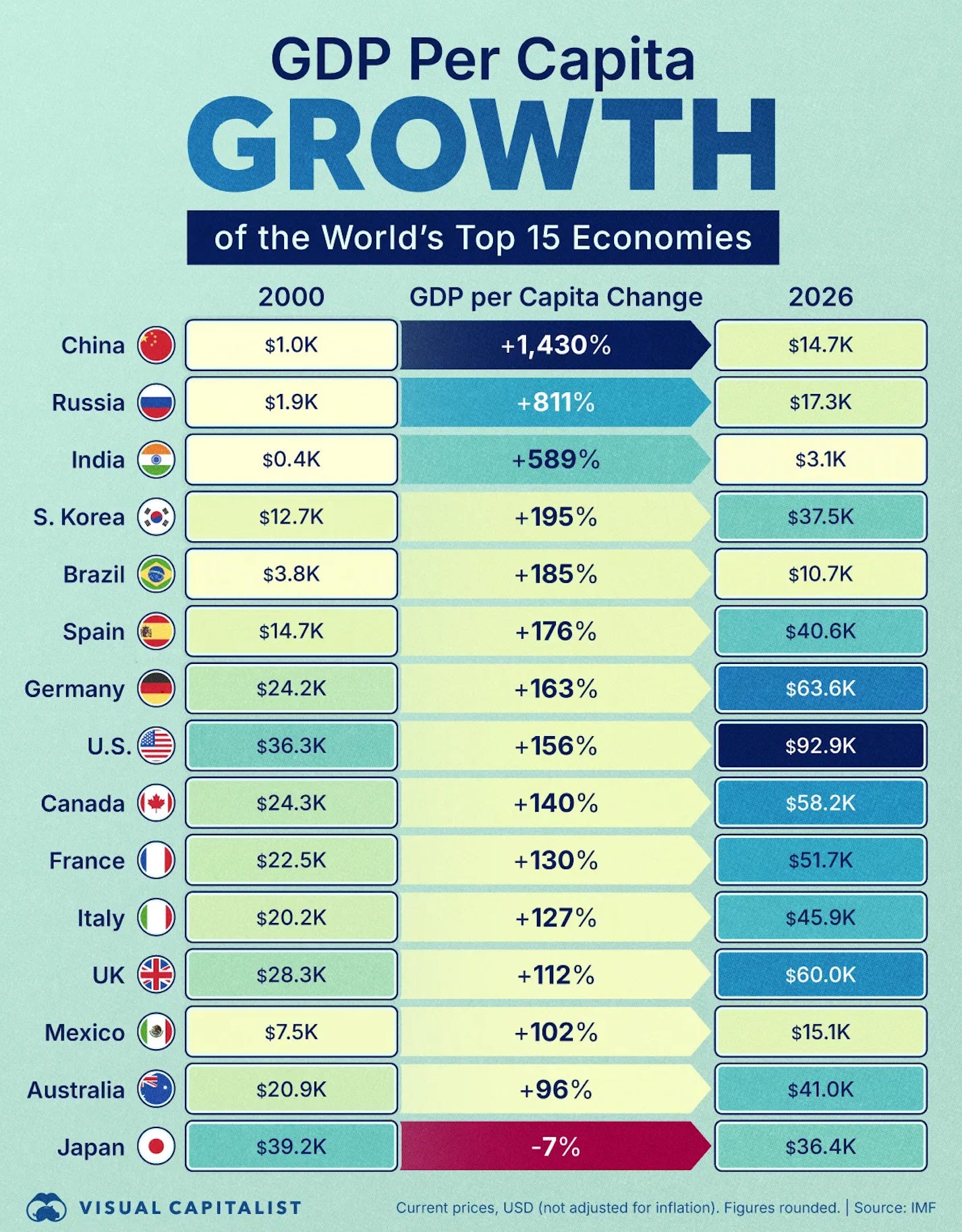
The Big Picture: Over the last 25 years, economic output per person has grown at very different speeds across the world’s largest economies. China’s GDP per capita increased more than 10x since 2000—the fastest among major economies. This means China added more output per person, in percentage terms, than any other major economy, fundamentally reshaping its position in the global middle class. India also recorded significant gains, with GDP per capita climbing from $0.4K to $3.1K, among the sharpest rises globally. South Korea’s GDP per capita more than tripled to reach $37.5K, owing to its manufacturing prowess. Since 2000, it has transformed from an emerging to an advanced economy, with GDP per capita now exceeding Japan’s. Japan is the only country where GDP per capita declined over the past 25 years. While rich nations saw comparatively lower growth than developing markets, a wide gap emerged within this group. Overall, Spain experienced the fastest growth, with GDP per capita rising 176%. In 2025, it grew at nearly twice the rate of eurozone countries, supported by domestic consumption and tourism. Germany, meanwhile, saw GDP per capita increase 163%, even outpacing the U.S.’s gain of 156%.
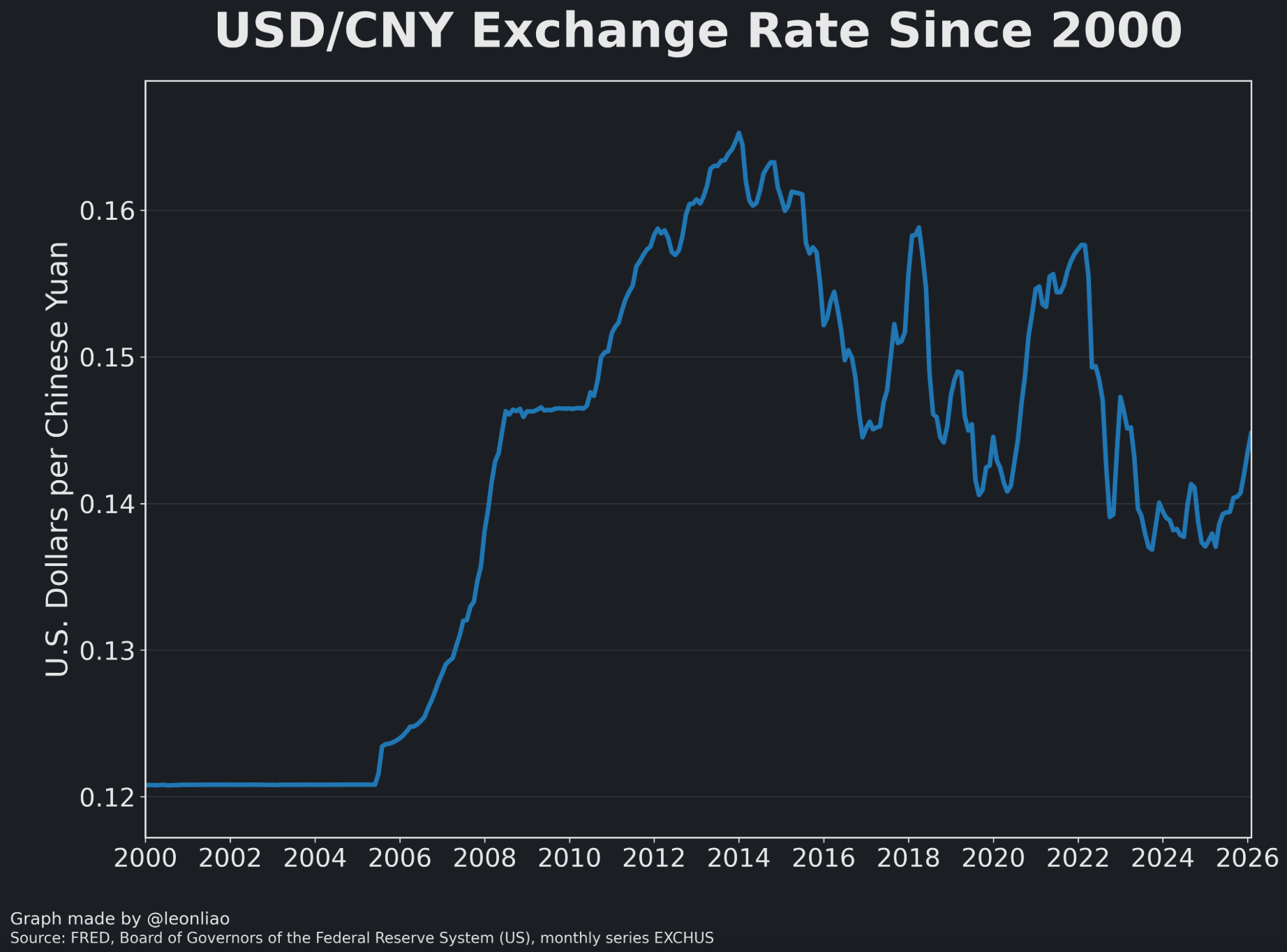
Spotlight: The Renminbi - “By comparison, the renminbi has actually appreciated by roughly 25% against the U.S. dollar over the past 25 years. China is an emerging market, but over the past two decades it has operated under a fundamentally different external-account structure, industrial structure, and monetary regime from most other EMs. The key point is that China has not relied on a model of continually attracting foreign capital to finance a current-account deficit. Instead, the renminbi has been supported by a powerful tradable manufacturing sector, consistently strong export capacity, a broadly persistent current-account surplus, and massive foreign-exchange reserves. In 2025, China’s trade surplus reached $1.2 trillion, rising to about 3.3% of GDP. At the same time, inflation running below that of its trading partners effectively produced a real exchange-rate depreciation, which in turn reinforced export competitiveness. China’s foreign-exchange reserves have also remained overwhelming by global standards, with the World Bank putting total reserves in 2024 at around $3.2 trillion. The renminbi is not a fully free-floating currency priced entirely and instantaneously by cross-border capital flows. This is one of the areas where the Chinese government has shown real strategic judgment: before national power reaches a certain level, full capital-market liberalization often brings more harm than benefit for an emerging economy. China has consistently maintained relatively strong capital-account management and a much stronger public balance sheet, which means that renminbi volatility is naturally more contained than that of many other emerging-market currencies. On top of that, manufacturing accounts for a significantly larger share of China’s GDP than it does in India, and manufactured exports account for a much larger share of China’s goods exports than in many resource-driven or services-led emerging markets. That means China is much better positioned to earn dollars through real trade and industrial competitiveness, rather than relying primarily on short-term capital inflows.” - Leon Liao
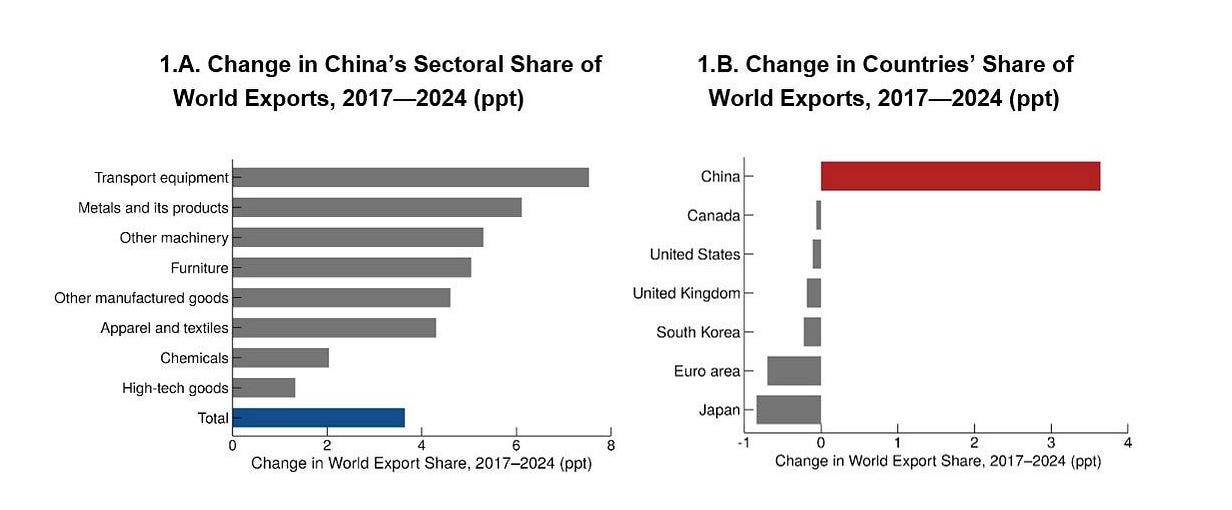
The Power of Continuous Process Innovation: “Contrary to the common view that China would move up the value chain as it gradually exhausted its pool of low-cost labor, it has expanded into higher-value sectors without ceding market share in lower-value industries.” - FED Research
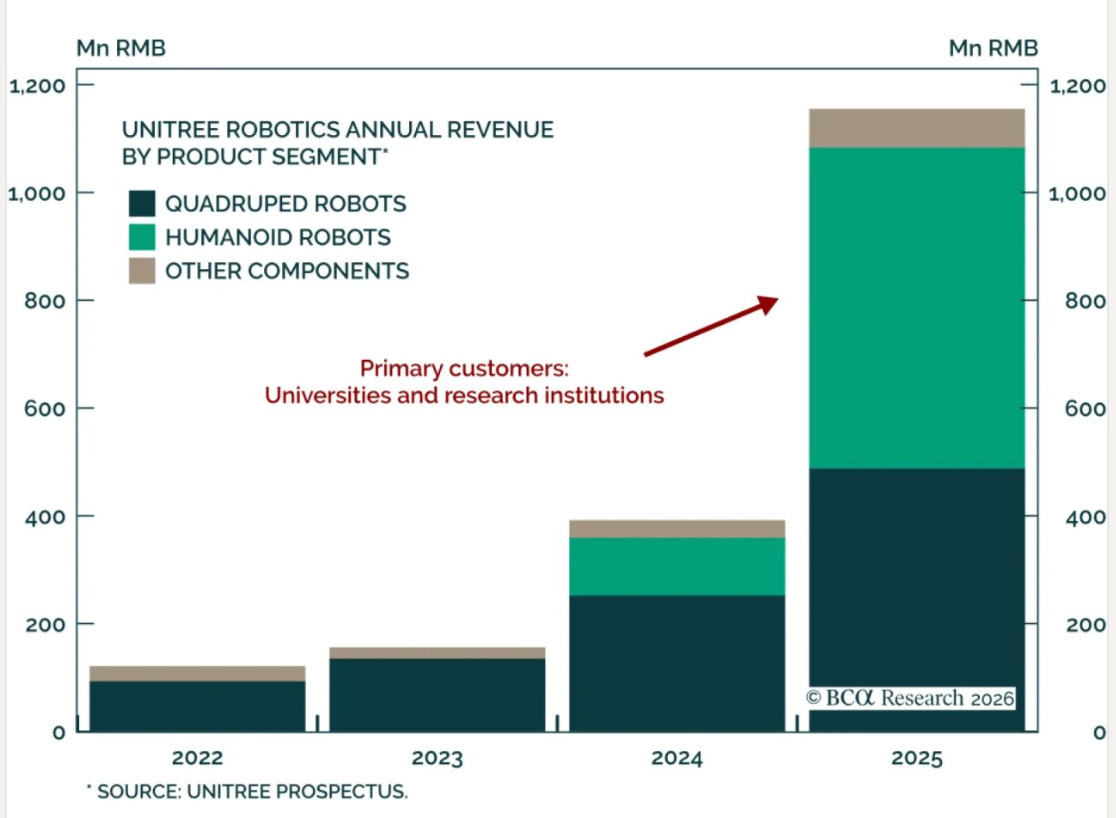
Spotlight: Humanoids - BCA Research highlights humanoid robotics as a long-term theme with limited near-term impact. Despite rapid advances in AI, humanoid robots remain in early stages. Only 13k units were shipped in 2025, mostly for entertainment, hospitality, and research, with industrial use still in testing across automotive and manufacturing. Adoption faces clear constraints, including battery limits, the need for 80-90% cost reductions, and regulatory and privacy hurdles. Over time, automation could add 40-85 bps to annual productivity growth and be disinflationary, with China well-positioned to benefit.
Spotlight - The Energy Transition: “Energy storage is transitioning from a complementary technology into a key pillar of economic infrastructure. Batteries are decoupling the moment electricity is generated to the time it is consumed, making electricity function as inventory in hand instead of a commodity to be bought. This facilitates the deployment of renewable sources and removes the constraints faced by intermittency. The costs for energy storage will continue to drop exponentially as economies of scale, vertical integration and chemistries evolve to satisfy the market’s needs. Despite new chemistries breaking through and being used for specific niches, we expect Lithium-Ion batteries to dominate the industry for years to come. Vertically integrated companies and differentiated goods & services OEMs will prove the most resilient as they hold the higher-value end markets.” - Gonzalo Belden, Bespoke Research
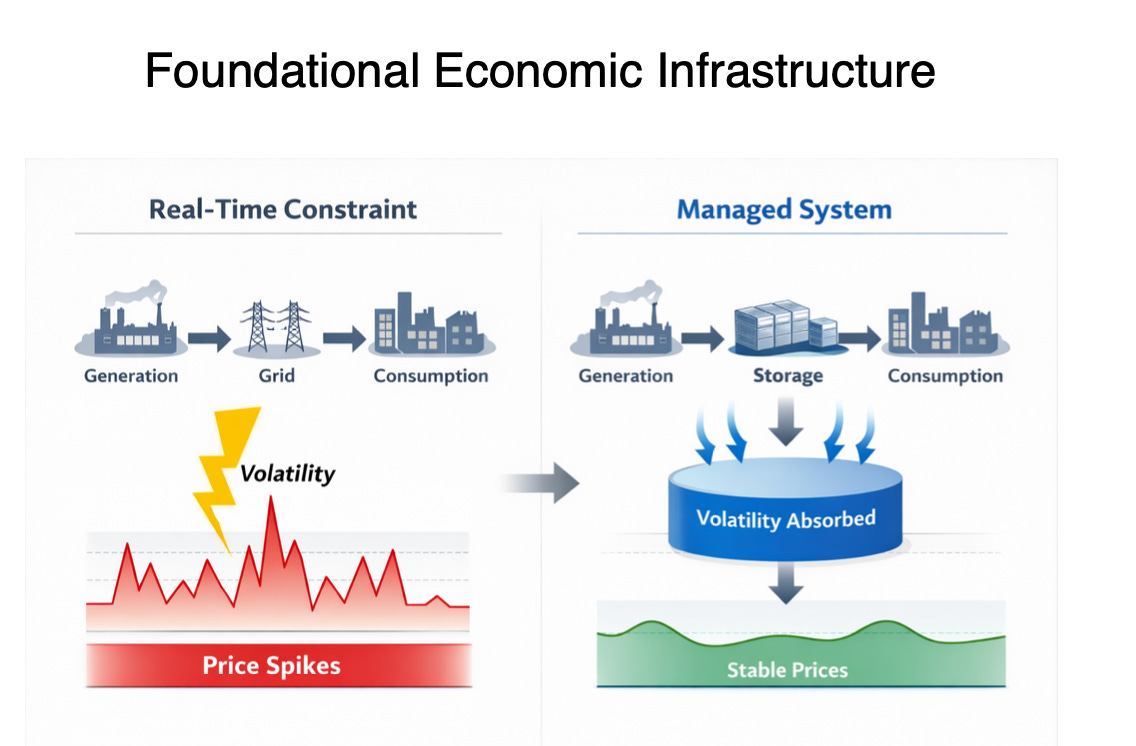
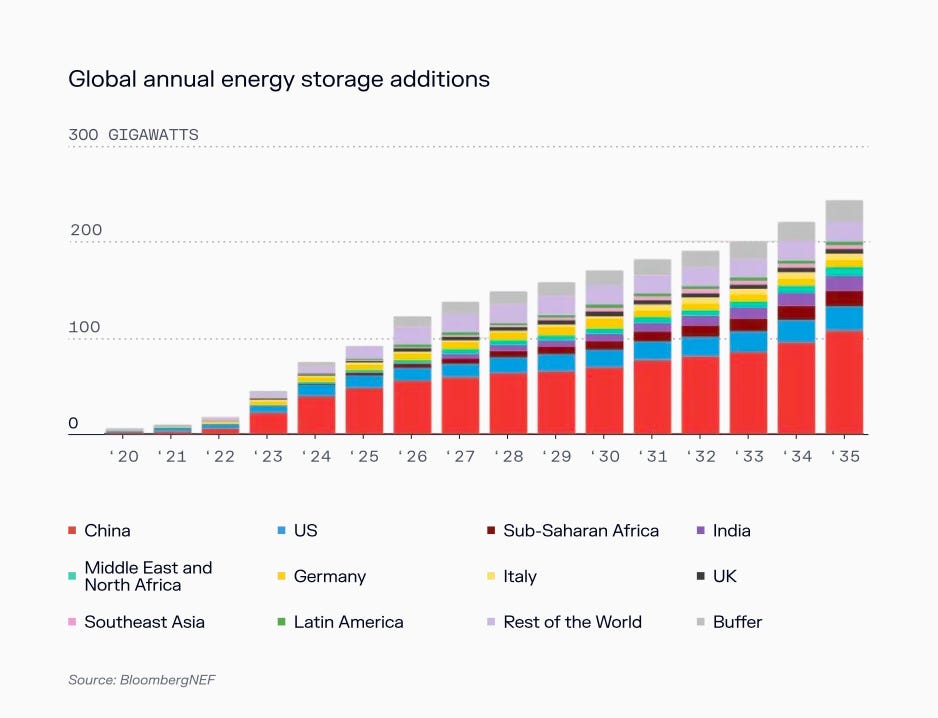
Spotlight - The Energy Transition: 92 gigawatts of global energy storage was added in 2025, up 23% YoY. China accounted for 50% of the buildout, followed by the US at 14%.
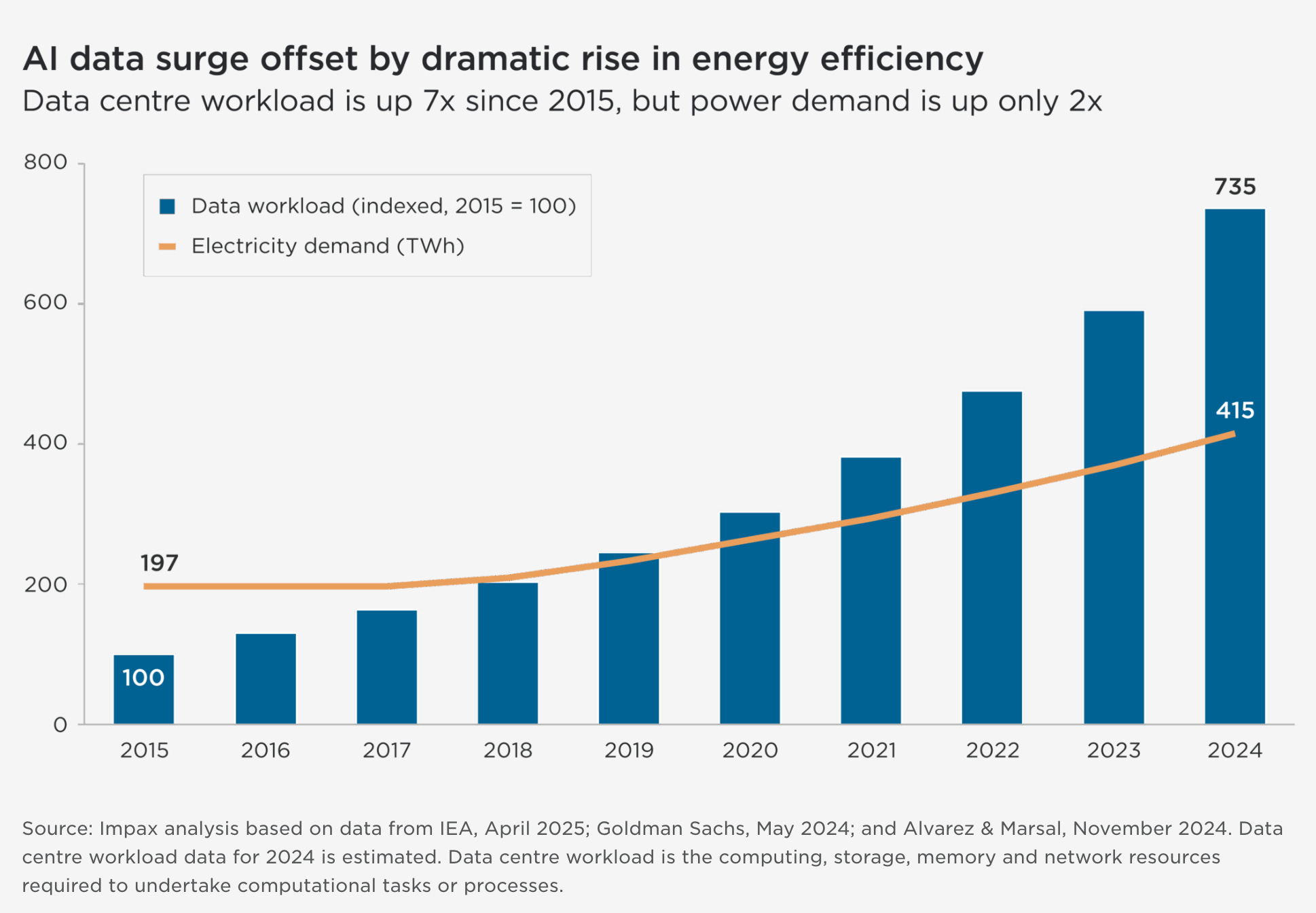
The Power of Wright’s Law: More efficient cloud computing, increasingly advanced semiconductors and the digitalisation of processes can all help further decouple economic growth from resource consumption.” - GS Research
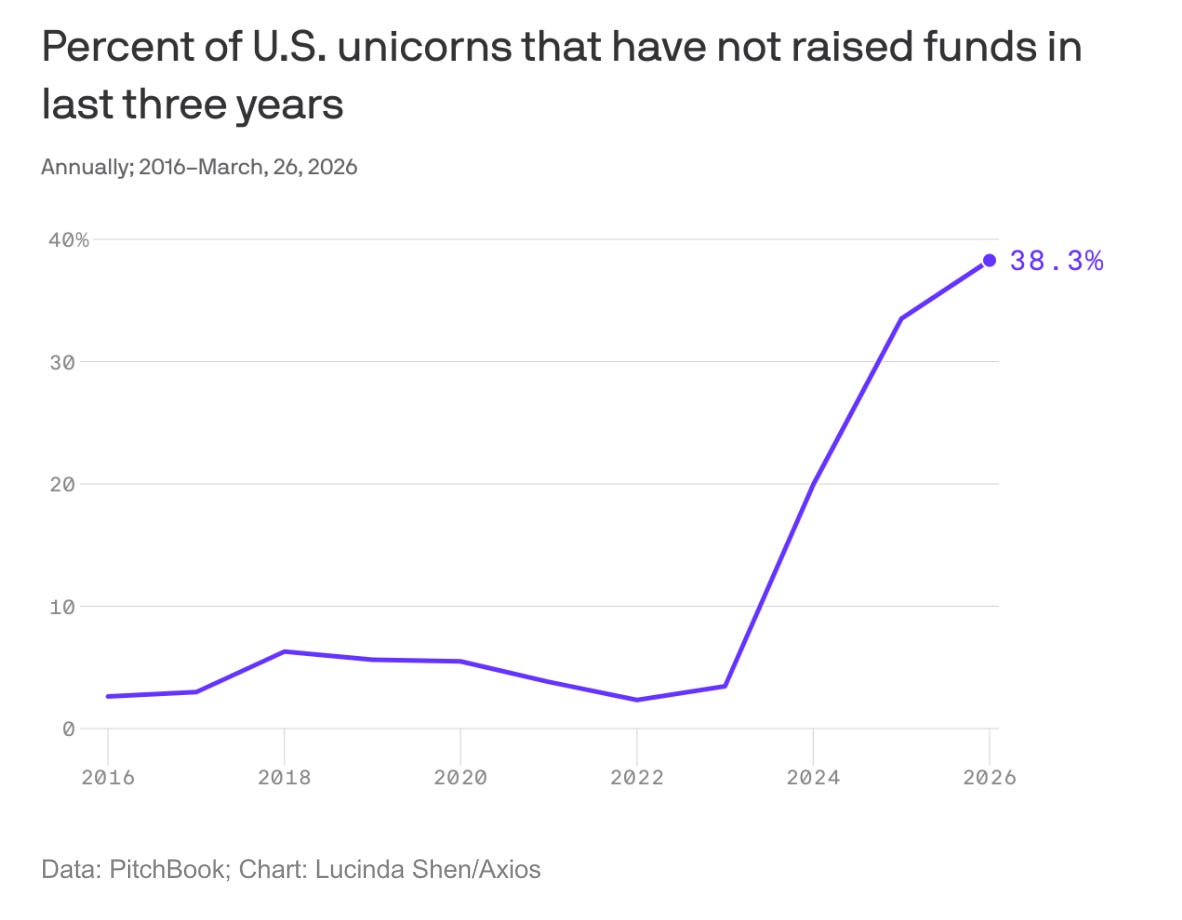
Spotlight: The State of Private Markets - Meet the Zombie Unicorns: “More than one-third of active U.S. unicorns haven’t raised funding in the last three years, per PitchBook data. The big picture: VC funding is flooding newer, AI-native companies while leaving behind the pre-2022 cohort of startups valued at more than $1 billion. By the numbers: Of the 111 U.S. unicorns that have raised through mid-March of this year, 55 were minted in 2026. The bottom line: There’s a growing percentage of startups that haven’t marked up their valuation in years. “There were a lot of direct-to-consumer companies and software businesses in there ... and they should’ve found an exit in 2021,” says PitchBook director of research Kyle Stanford.
2 If You Read One Thing Today - Make Sure it is This
For the last two years, the AI conversation at most companies has been about individual productivity: who’s using it, how much faster they’re moving, and what it means for their role. That conversation is still very much alive. Alongside it, another is emerging: What happens when you use AI to make an entire organization more productive? Joanne Chen and Leo Lu talked to a range of companies to get a sense of the answers…go explore it in full here - plenty to ponder and insights from which to visualize potential futures…Do it here:
https://foundationcapital.com/ideas/the-great-reorg?utm_
Some Takeaways
A few data points:
Teams are getting dramatically smaller.
A 120-person engineering team at one company is planning to cut down to 25.
Another running 30+ microservices has gone from 0.75 engineers per service to a projected 0.1: a single engineer overseeing what used to require eight people.
The roles that remain are changing shape.
Organizations need fewer deep specialists and more people who can work fluidly across functions. One company we spoke to with an expert-to-generalist ratio of 1:6 today is targeting 1:25 within twelve months and 1:100 eventually.
At another, three traditional roles — product, engineering, and design — have collapsed into two: product builders who combine UX and product thinking, and product implementers who orchestrate coding agents and own system design.
The bar for staying is rising.
At a 1,000-person company, there’s now a mandate called “My First Pull Request”: every PM, designer, and non-engineer must ship code using AI tools.
At that same company, 25-30% of product meetings now open with working prototypes instead of slide decks. The expectation has shifted from pitching ideas to demonstrating them.
Another large company is asking every employee, across engineering and GTM, to reinterview for their role by building an app that makes them better at their job. The distance between having an idea and seeing it work is shrinking to near zero, and the ability to close that gap is fast becoming the baseline expectation for every role.
We believe these are early signals of a much larger shift: from organizations where individuals use AI to move faster, to organizations rebuilt around AI to move faster as a whole.
Drawing on our research with the people actually driving these changes, this piece is our attempt to map that transition: which roles stay human, which move to agents, and what the org of the future actually looks like.”
From more productive people to more productive orgs
This shift is hard to make, and most companies aren’t there yet. It’s a pattern we’ve seen before.
When factories first switched from steam to electricity in the 1890s, the initial productivity lift was limited. Most manufacturers kept the same factory architecture and simply swapped in the new source of power. It was only later, in the 1910s and 1920s, when manufacturers redesigned the factory around electricity — distributing power more flexibly across the floor, reorganizing workflows, and creating new roles for both workers and machines — that the gains began to materialize.
The same was true of the car. Its basic utility was immediate: it could move people farther and faster than a horse. But the larger transformation it promised required the built environment to be redesigned around it. Early automobiles entered streets built for pedestrians and horses, in cities organized around walking distance and rail. Over time, roads were paved and widened, and traffic systems and parking were added. Eventually, highways, suburbs, and new land-use patterns reshaped urban life around the assumption of widespread car ownership.
In both cases, the technology on its own was just one part of the breakthrough. The true transformation happened once people architected the surrounding system around it.
Most companies are still in the equivalent of the cars-on-dirt-roads phase of AI. AI is making many individuals meaningfully faster.
But faster individuals do not automatically add up to a more productive organization, especially when the underlying structure — how decisions get made and how work flows — was built for a pre-AI world.”
Are you managing the agents, or are the agents managing you?
In the emerging org, both of these shifts are happening at once.
One set of humans is moving up the stack: designing systems, setting guardrails, and owning outcomes. At the same time, many humans are finding their work increasingly coordinated by software: scheduled, routed, and evaluated by agents rather than people. In some cases, AI can offer more consistent and personalized guidance than a human manager can.
It’s important to note that providing guidance and building relationships are different things. Guidance delivers information: the right feedback at the right time, a personalized learning path, or a well-timed nudge. A relationship creates the trust, social bonds, and sense of belonging that connects people to their work and motivates them to their best. For now, and likely for a long time, workplace relationships are still built by humans, for humans.
Taken together, these two shifts produce a flatter org chart, with fewer layers, fewer people, and a more sophisticated operating system beneath it.”
“The curve keeps shifting right as new domains like drug discovery, scientific research, and physical system design open up. Each new domain creates a new wave of validator demand.
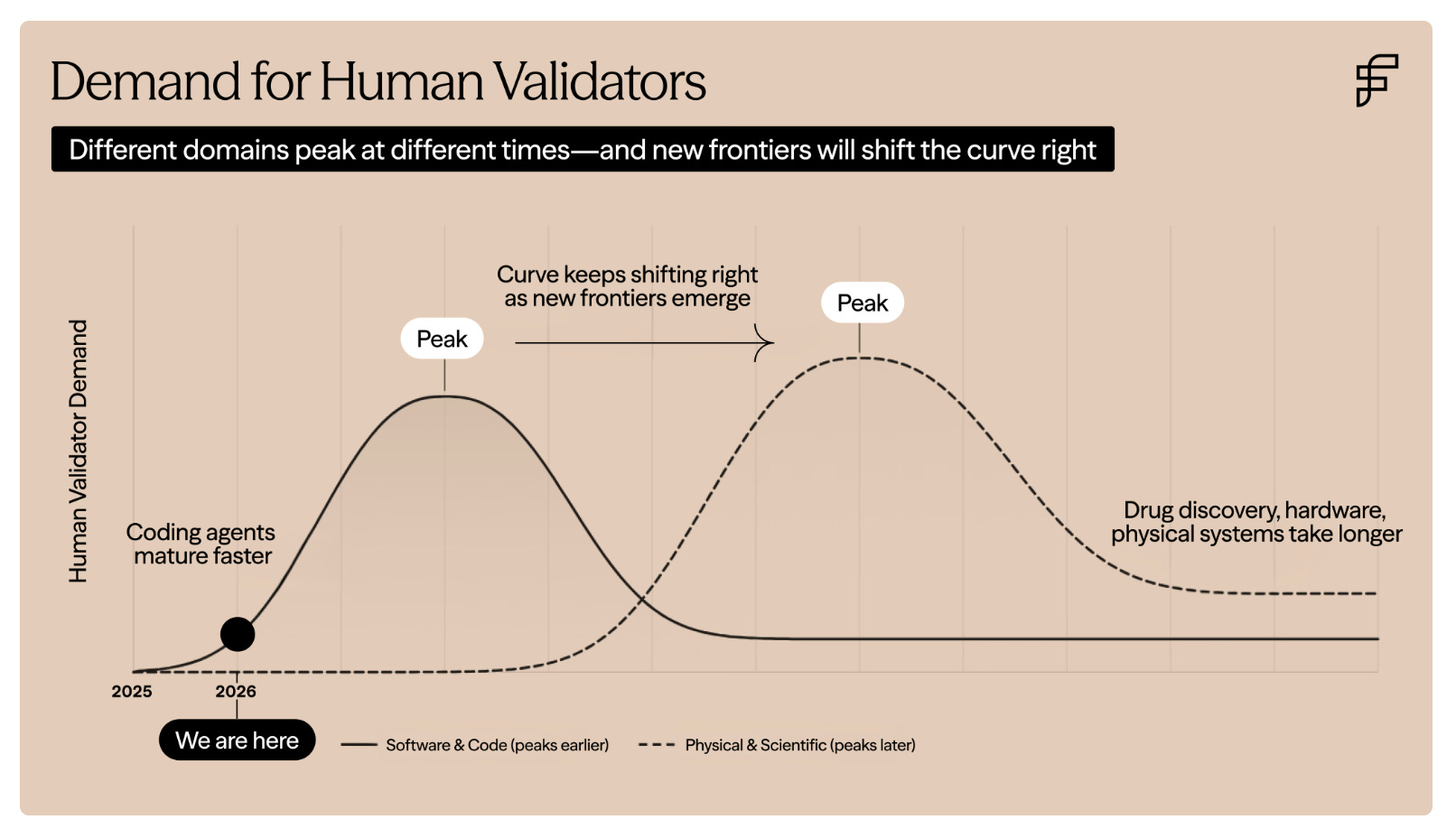
“This brings us to an important risk in the shift to an agent-heavy workforce: the one-generation problem. Today’s validators are experts because they did the IC work themselves. But if agents handle all the junior analyst work, all the first-draft code, and all the entry-level deliverables, how does the class of 2035 build that expertise? They may never get the reps.
The validator pool is a one-generation asset unless we deliberately replenish it. It’s a Russian doll: at the very end of this curve, if there are no more validators and experts, that’s AGI. We don’t think that happens. Humans keep evolving, the frontier keeps moving, and new domains keep creating new demands for human expertise. But the gap between “current experts retire” and “new experts emerge” is real, and it’s worth taking seriously.”
Digital product orgs: smaller teams, higher leverage
This is where the great reorg is most visible today. The legacy org structure for digital product teams — engineering, product, design, sales, marketing, CX, finance, HR, legal — is built around specialization. Each function exists because doing it well historically required dedicated people who focused on little else. So you built separate teams for each function, with handoffs and coordination structures to stitch the work back together.
AI tools upend this logic. People are able to act as generalists and are shifting into the higher-order roles described above: setting direction, designing systems, owning relationships, and validating outputs. Nine functions are collapsing into three: R&D, GTM, and G&A.
Within each function, a leaner human layer works alongside an agent layer that drafts, executes, and analyzes, with humans reviewing and approving the outputs. In R&D, reasoning agents triage bugs, run impact analyses, and investigate root causes, while action agents implement features, generate tests, and write and update documentation. In GTM, reasoning agents plan campaigns, analyze funnels, and develop brand strategy, while action agents generate content, place and optimize ads, and nurture leads. In G&A, reasoning agents forecast budgets, assess contract risk, and plan resourcing, while action agents run payroll, process invoices, draft contracts, and provision IT.
The result is a company that scales with the work rather than with headcount. The roles that stay human are more senior, more cross-functional, and more accountable than before.”
Digital services orgs: agents do the work
This is the quadrant under the most immediate pressure. In digital product companies, agents help build the product. In digital services companies, the product is the work itself — and increasingly, agents are doing it. The AI system drafts the memo, processes the claim, analyzes the data, reviews the document, and produces the deliverable. Large human delivery teams shrink, and what remains is a human layer wrapped around an agentic core.
Two human roles become especially important. The first is the relationship expert: the person who wins trust, manages the client, navigates politics, and remains the face of the service. The second is the accountability officer: the person who stands behind the output when the client is unhappy or something goes wrong.
Selling services still requires humans, even when delivering them increasingly doesn’t. A buyer doesn’t sign a seven-figure engagement because the AI demo went well: they sign because they trust the person across the table. That’s why the human wrapper in digital services is narrower than in any other quadrant: fewer people doing the work itself, more people owning the human relationships and accountability around it.
This is also why AI-native challengers are such a threat to incumbents here. A new entrant can design the human-agent division of labor from scratch — no legacy delivery floor to restructure, no existing workforce to retrain — and compete on a cost and speed advantage that will be difficult to close.”
Physical product orgs: the biggest Greenfield
Physical product companies are often described as the least affected by AI. We think that undersells the opportunity.
Designing, prototyping, manufacturing, and testing physical products still requires interaction with atoms, not just bits. That makes the timeline longer and the tooling stack much less mature than in software. There’s Claude Code for software development, but no equivalent universal stack yet for physical products. But that’s also what makes the opportunity so large: most of the value is still ahead.
The org structure here looks similar to digital products, with the same four human roles distributed across R&D, GTM, and G&A, plus a fourth function — Supply Chain Management — that reflects the complexity of bringing physical products to market.
The work those roles govern, however, looks quite different from digital products. System designers define how AI integrates into physical design and manufacturing processes, not just software pipelines. Validators approve prototypes and sign off on safety certifications, rather than only reviewing code.
On the agent side, agents compress the most time-intensive parts of the physical development cycle — including design feasibility, simulation, supply chain optimization, and quality control — while action agents handle the documentation and logistics work that currently consumes significant engineering bandwidth. The result is a smaller human team taking on more complex and ambitious work than before.
Physical services orgs: agents handle the overhead
In physical services, the human is the product, and the human relationship is what keeps customers sticky. A cleaner has to show up at your house. A doctor has to examine you, listen to you, and talk you through your options. A truck driver has to be behind the wheel, at least for now. The transformation here isn’t about replacing the human as the service provider, but about everything that surrounds them.
Of all four quadrants, this is where “managed by agents” goes the furthest. The coordination overhead that currently surrounds service workers (scheduling, routing, paperwork, and dispatch logistics) is what agents are moving into fastest. That frees humans to focus on the work itself rather than the administrative and ops scaffolding around it.
The timelines vary significantly within this category. Truck driving has a clear path to full automation. Hospitality is a different story. In restaurants, hotels, and care settings, human interaction is central to the service. People want to feel looked after by another person, and that preference is unlikely to change, regardless of what agents can do.”
What matters most for humans in the future
So if this is where the world is heading, what should you do about it?
We believe that the humans who thrive in this new world will share a few characteristics.
The most valuable skill in the emerging org is systems thinking: the ability to see how pieces fit together, design workflows, and architect how humans and agents collaborate. It’s also the hardest to develop, because it requires both technical fluency and deep understanding of how the business actually works. The best companies we talked to aren’t mandating AI adoption through training programs: they’re hiring people who already think this way and letting the culture follow.
High agency and a growth mindset are also key. If your instinct is to resist and hope AI doesn’t reach your function, you’re already behind. The humans who thrive will be the ones who embrace reinvention and constantly experiment with new ways of working.
The org chart is being redrawn. That’s unsettling for a lot of people, and understandably so.
But it’s also an invitation. The humans who lean in, who learn how to collaborate with agents instead of competing against them, who treat this as the beginning rather than the end of something, won’t just survive the reorg. They’ll be the ones who shape it.”
3 Consequential Thinking about Consequential Matters
The IMF Crew takes a look at the “High Debt, Hard Choices” reality in this report - It’s some Consequential Thinking about Consequential Matters that you should be considering as you map out the potential paths ahead…
https://www.imf.org/en/publications/fandd/issues/2026/03/high-debt-hard-choices-era-dabla-norris
Some Takeaways
“Mounting public debt and rising interest rates are stretching finances and forcing difficult decisions
Fiscal policy has always involved trade-offs. Whose priorities will be financed? Whose burdens will be deferred? Under what conditions? Until recently, governments could postpone these choices by borrowing on convenient terms. But now, unprecedented debt levels and higher borrowing costs have raised the stakes. At the same time, demand for public funds is growing even as resources are stretched thin. Societies can reconcile competing priorities successfully only if they depend on something often overlooked and currently in short supply: public trust.
Even before the COVID-19 pandemic, public debt was climbing steadily. In many democracies, political platforms favored higher spending and deficits while deferring structural reforms (Cao, Dabla-Norris, and Di Grigorio 2024). Modest economic growth, spending to care for a swelling elderly population, and reluctance to raise taxes just made things worse. Hard choices were put off, and debt accumulated, sustained by the unusually low interest rates of the past two decades.”
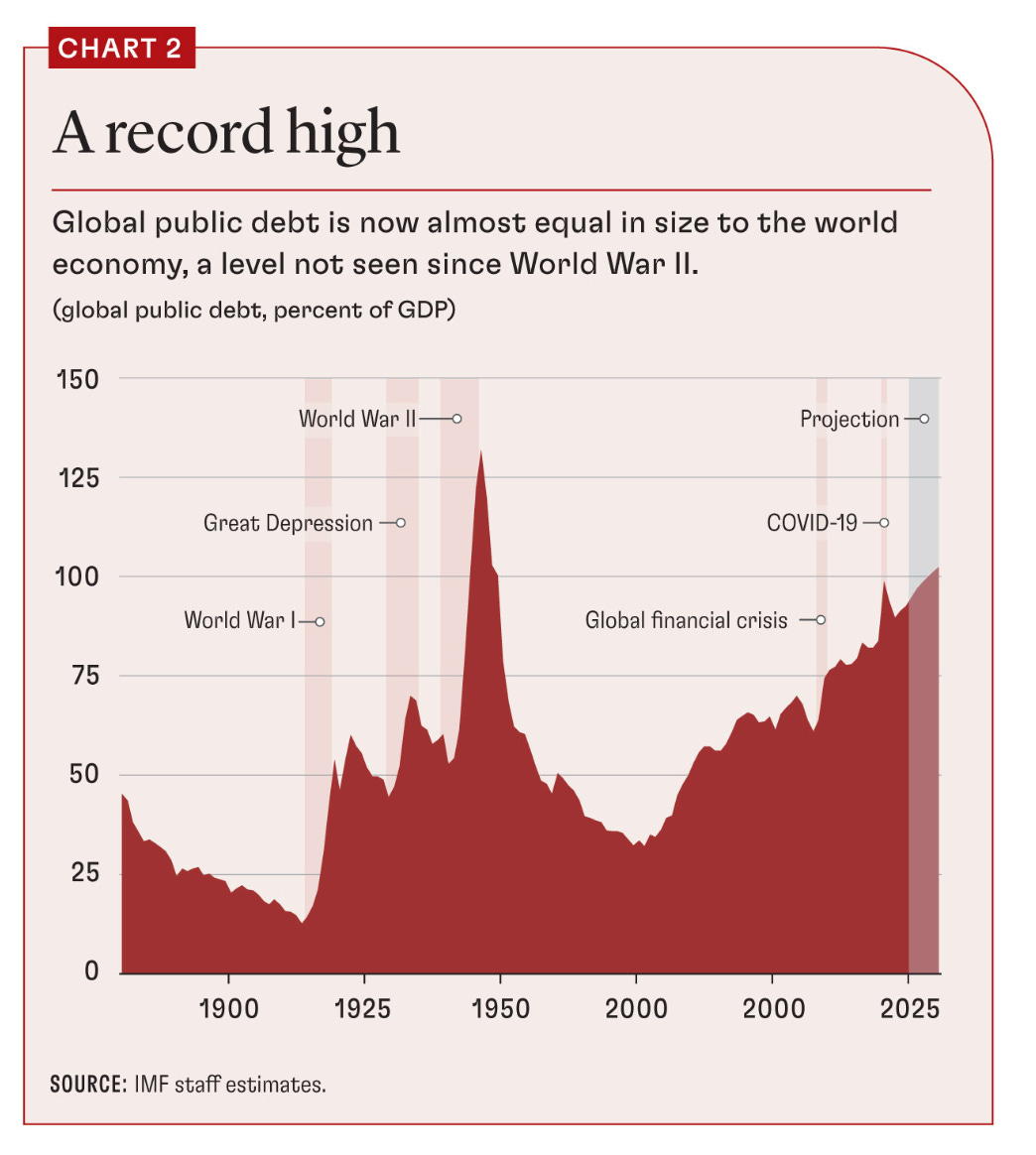
Today, policymakers face the fiscal version of long COVID—higher interest rates and rising debt costs. Global public debt climbed to 93.9 percent of GDP in 2025 and is on track to breach 100 percent by 2028—levels never seen in peacetime—marking a turning point for economic policy and politics.
Meanwhile, long-term structural forces—aging populations, climate change, rising social demands, and, for low-income countries, declining aid flows and persistently high borrowing costs—continue to bear down on budgets even as emerging geopolitical tensions exert pressure to spend on defense and industrial policy.”
Debt burden
The era of ultra-low interest rates has ended, but economic growth trends have not changed appreciably. Within a short span, borrowing costs have doubled or tripled. Interest bills now take a larger bite out of budgets, crowding out other priorities. In the US, for example, net interest payments climbed from about 2 percent of GDP before the pandemic to 4.2 percent in 2025—surpassing defense spending—and are set to rise further. In low-income countries, interest payments consume 21 percent of tax revenues on average.
High debt means less room to respond to shocks, interferes with the broader economy by raising the cost of capital, and complicates monetary policymaking while motivating financial repression. It can also threaten financial stability, especially in emerging markets, if yields rise as investors begin to doubt government’s ability to make good on its obligations.
As financing conditions tighten, adjustments can become sharper and more sudden—recalling German 20th century economist Rudi Dornbusch’s insight that “crises take much longer to happen than you think, and then they happen faster than you thought they could.”
And high debt shifts national income toward creditors at the expense of other needs.”
“…today, the era of easy choices is over.
Every dollar a government borrows without matching revenue implies higher taxes or lower spending in the future, at least to cover the additional interest the new debt generates. Beyond a certain point, more borrowing forces painful decisions—through austerity, inflation, financial repression, or even default. The question becomes unavoidable: With limited fiscal space, what will be the trade-offs, and who will bear the cost?”
“A third conundrum is whether to invest now or conserve firepower for later. Pressing needs—national security, resilience to shocks, climate transition, social inclusion, and development—demand resources.
But every dollar spent today means a thinner cushion for the next crisis.
In a world of frequent shocks, the trade-off is harsh.
Countries that exhaust borrowing capacity in good times will find themselves dangerously exposed when the next recession or disaster strikes. It’s not about planning around best-case scenarios but designing fiscal strategies that are workable when surprises hit: It pays to hold something back when the next crisis may be just around the corner.
Each budget decision now has explicit winners, losers, and timing—and the political economy of those choices has grown more complicated. Who or what gets priority? Which taxes will fund it, and which programs must give way? These questions can no longer be papered over with new debt. They must be answered clearly, and that is proving to be a formidable challenge.”
“High public debt is more than a macroeconomic concern; it is also a question of fairness across generations. In the words of the 18th century statesman Edmund Burke, “Society is a partnership...between those who are living, those who are dead, and those who are to be born.”
Debt makes it possible to finance growth-enhancing projects, cushion a shock, or spread costs more evenly over time. But persistent deficits are financed with debt that tomorrow’s workers and taxpayers must service. When the debt is large and interest rates rise, more public resources flow to bondholders than to public goods. That transfer continues as long as the debt remains—and grows larger if borrowing continues.
Demographics intensify the challenge in two ways. As societies age, the cost of providing pensions and health care begins to grow faster than tax revenue. And where birth rates collapse, these costs are borne by a shrinking workforce. Advanced economies now have about three workers per retiree, down from roughly four in 2000, and the number is heading toward two workers by 2050 (OECD 2025). Moreover, many pension and health care obligations remain off the government’s balance sheet, and as populations age, these implicit liabilities surface in budgets, often with destabilizing force. That poses difficult choices: Raise taxes, lower benefits, or keep borrowing and simply delay the reckoning.
The longer tough decisions are postponed, the more abrupt and onerous the adjustment when creditors or fiscal reality finally forces action. And worse, the bill falls to fewer people. Meanwhile, transfers and other current spending and debt service can crowd out investment in education, technology, and infrastructure, eroding the prosperity of the next generation. The political economy magnifies the challenge. Current voters resist cuts to earned or promised benefits, and older voters can form an especially powerful electoral bloc.
Politicians, tempted to avoid unpopular measures like raising retirement ages, trimming benefits, or broadening the tax base, let debt take the strain instead. This bias toward the present raises significant fairness issues.
Younger people see governments running up debt and suspect that they will be handed the check through higher taxes and leaner public services when they retire.
Trust erodes, and the social contract between generations frays.
Financial markets also take notice, demanding higher risk premiums or pulling back when they perceive that fiscal adjustment is being postponed indefinitely.”
“Trust is a belief that something is safe and reliable, or that a person is good and honest. Each of these elements has a fiscal counterpart:
Arrangements must be understood, fair, transparent, and competent; otherwise, they will not be trusted.
Many societies are suffering from a trust deficit.
Recent research, based on a survey of 27,000 people in 13 countries conducted in 2024, sheds light on the gaps in perception that feed this distrust (Bianchi, Dabla-Norris, and Khalid 2025). Many people—across both advanced and emerging market economies—do not understand basic fiscal issues. For example, only about 42 percent of respondents to the survey understood that raising taxes or cutting spending would reduce a government deficit. Similarly, more than 60 percent underestimated their country’s debt-to-GDP level, especially in high-debt countries. If people believe debt isn’t that high or harmful, they will naturally view calls for fiscal reform as overblown or politically motivated. Such misperceptions blunt the sense of urgency and make it harder to build support for timely corrective action.
Without trust, pessimism about government policies rises.”
“Trust is central to this equation. People need to believe that sacrifices will be shared justly and that reforms will lead to tangible benefits. People are more likely to support difficult measures if they perceive fiscal policy as competent, transparent, and fair. But trust cannot be summoned overnight. It must be earned and sustained.”
“Balancing realism about constraints with ambitions for change is essential. If we manage the debt challenge wisely, we can secure a stable foundation for long-term prosperity and preserve the social contract between generations. If we fail or wait too long, we risk economic turmoil and further erosion of faith in institutions. The fiscal path we choose today will define prosperity and fairness tomorrow.”
4 Big Ideas
Two Big Ideas are explored in the two articles below - First the power of human ingenuity and the sun and secondly a look at the leaps underway in robotics…go read them in full here:
https://scitechdaily.com/scientists-just-broke-the-solar-power-limit-everyone-thought-was-absolute/
https://robotics.techbuzzchina.com/reports/robot-hands-china.html
Some Takeaways
The power of the sun unleashed…
Scientists Just Broke the Solar Power Limit Everyone Thought Was Absolute
A new “energy-multiplying” solar breakthrough could push efficiency beyond 100% and transform how we capture sunlight.”
“The Sun delivers a vast amount of energy to Earth every second, but today’s solar cells can only capture a small portion of it. This limitation comes from a so-called “physical ceiling” that has long been considered unavoidable.”
“In a study published today (March 25) in the Journal of the American Chemical Society, researchers from Kyushu University in Japan, working with collaborators at Johannes Gutenberg University (JGU) Mainz in Germany, introduced a new approach to overcome this barrier. They used a molybdenum-based metal complex known as a “spin-flip” emitter to capture extra energy through singlet fission (SF), often described as a “dream technology” for improving light conversion.
This method achieved an energy conversion efficiency of about 130%, exceeding the traditional 100% limit and pointing toward more powerful future solar cells.”
How Solar Cells Work and Why Energy Is Lost
Solar cells generate electricity when photons from sunlight strike a semiconductor and transfer their energy to electrons, setting them in motion and producing an electric current. This process can be visualized as a relay, where energy is passed along particle by particle.
However, not all sunlight contributes equally. Low-energy infrared photons lack the power to excite electrons, while high-energy photons, such as blue light, lose excess energy as heat. Because of this imbalance, solar cells can only utilize roughly one-third of incoming sunlight. This restriction is known as the Shockley–Queisser limit and has posed a major challenge for decades.”
“We have two main strategies to break through this limit,” says Yoichi Sasaki, Associate Professor at Kyushu University’s Faculty of Engineering. “One is to convert lower-energy infrared photons into higher-energy visible photons. The other, what we explore here, is to use SF to generate two excitons from a single exciton photon.”
Under typical conditions, one photon produces just one spin-singlet exciton after excitation. With SF, that single high-energy exciton can split into two lower-energy spin-triplet excitons, potentially doubling the usable energy. While materials like tetracene can support this process, efficiently capturing the resulting excitons has remained difficult.
Overcoming Energy Loss From FRET
“The energy can be easily ‘stolen’ by a mechanism called Förster resonance energy transfer (FRET) before multiplication occurs,” Sasaki explains. “We therefore needed an energy acceptor that selectively captures the multiplied triplet excitons after fission.”
To solve this problem, the researchers turned to metal complexes, which can be precisely engineered at the molecular level. They identified a molybdenum-based “spin-flip” emitter that can effectively collect the energy produced during SF. In these molecules, an electron changes its spin during interactions with near-infrared light, allowing the system to absorb triplet energy efficiently.
By carefully adjusting energy levels, the team reduced losses from FRET and enabled selective extraction of the multiplied excitons.
Collaboration and Experimental Results
“We could not have reached this point without the Heinze group from JGU Mainz,” Sasaki says. Adrian Sauer, a graduate student from the group visiting Kyushu University on exchange and the paper’s second author, brought the team’s attention to a material that has long been studied there, leading to the collaboration.
When combined with tetracene-based materials in solution, the system successfully harvested energy with quantum yields of around 130%. In practical terms, this means about 1.3 molybdenum-based metal complexes were activated for every photon absorbed, surpassing the conventional limit and demonstrating that more energy carriers were generated than incoming photons.
Future Applications in Solar and Quantum Technologies
This research introduces a new strategy for amplifying excitons, although it is still at an early proof-of-concept stage. T
he team plans to integrate the materials into solid-state systems to improve energy transfer and move closer to real-world solar cell applications.
The findings may also inspire further work combining singlet fission with metal complexes, with potential uses not only in solar energy but also in LEDs and emerging quantum technologies.”
Watch the Hand…
The State of Robot Hands in China
A comprehensive analysis of dexterous manipulation technology across China’s humanoid robotics industry — covering the $123M-to-$5.8B market opportunity, competing technology approaches, the companies racing to dominate, and why China is emerging as the global leader in cost-disruptive robot hands.”
Why Hands Matter
Of all the components in a humanoid robot, hands are arguably the most critical for real-world utility — and the hardest to get right. A robot that can walk but not grasp is a novelty; a robot that can manipulate objects with human-like dexterity is a revolution.
The human hand has 27 degrees of freedom, over 17,000 tactile receptors, and can exert forces ranging from the delicate touch needed to pick up an egg to the firm grip required to turn a wrench. Replicating even a fraction of this capability is one of the grand challenges in robotics.
For humanoid robots specifically, dexterous hands are not optional — they are mandatory. Unlike industrial robots that can get by with simple two-finger grippers in structured environments, humanoid robots are designed for human environments where they must handle objects of infinite variety in shape, material, and weight. Every humanoid robot that ships needs two hands, making this a market that scales directly with humanoid robot production volumes.
The industry faces three core bottlenecks: extreme cost, insufficient reliability, and control complexity. High-end dexterous hands remain prohibitively expensive for mass deployment; mean time between failures falls short of industrial automation standards; and control algorithms still rely heavily on simulation and trial-and-error, with weak generalization in real-world environments.
These bottlenecks point to a deeper issue — dexterous hands are not a single missing technology, but an entire supply chain from base components to system integration that has yet to mature.
KEY INSIGHT
Dexterous hands currently represent 15-20% of a humanoid robot’s total cost. The average global price per hand in 2024 was approximately $7,960 (~¥57,000). But Chinese companies are driving prices down dramatically — with some models now available for under $1,000, a 99%+ reduction from high-end imports that cost over $150,000 per hand.”
Market Opportunity
The dexterous hand market is on the cusp of a transition from niche research tool to mass-market industrial component. According to Global Info Research (GIR), global revenue for multi-finger robot hands reached approximately $123 million in 2024 and is projected to hit $5.849 billion by 2031 — a compound annual growth rate of 65.9%.”
“Applications are expected to unlock in clear tiers: special operations (nuclear, space, deep sea) and high-end research first; then commercial humanoid robots, medical prosthetics, and precision assembly in 3-5 years; and finally home service, education, and consumer robotics in 5-10 years — the ultimate mass market.”
Technology Landscape
Dexterous hand design involves critical choices across three interconnected systems: drive (how to generate force), transmission (how to deliver force to fingertips), and sensing (how to feel what you’re touching). The industry is currently converging from early experimentation toward a clearer set of mainstream approaches.
Drive Systems
Electric motors are the dominant drive approach, with coreless (hollow-cup) motors being the most widely used. Their ironless rotor design eliminates cogging torque, enabling response times under 10 milliseconds and energy efficiency above 85% in extremely compact packages. Chinese suppliers are rapidly closing the gap with European incumbents — see our Actuators & Motors deep dive for a full analysis of motor types, pricing dynamics, and the domestic substitution race.
Alternative drive approaches include pneumatic/hydraulic systems (good compliance but low precision), ultrasonic motors (zero-magnetic, self-locking — ideal for medical/MRI environments but limited by friction wear), and shape memory alloys (simple and silent but too slow for commercial use).
Transmission Systems
Since motors typically can’t fit inside fingertips, transmission mechanisms deliver force across distance. Three main approaches dominate:
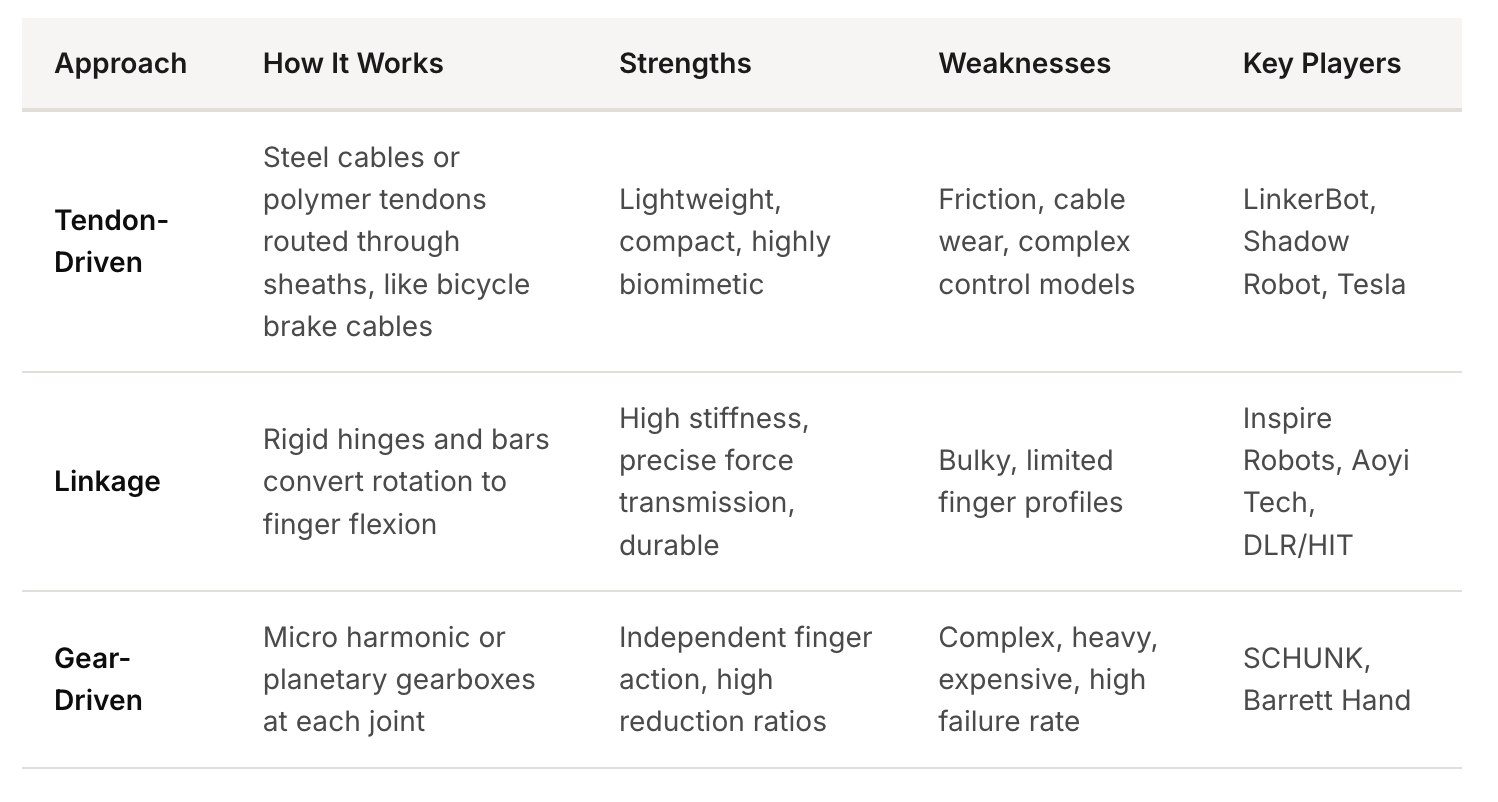
The industry consensus is converging toward hybrid tendon + rigid structure combinations that balance wear resistance with flexibility. LinkerBot (灵心巧手) is notable for being one of the few companies covering tendon, direct-drive, and linkage approaches simultaneously.
Sensing Systems — The Biggest Bottleneck
Tactile sensing is widely recognized as the single largest technical bottleneck in dexterous hands. The challenge: simultaneously measuring normal force, shear force (sliding), texture, and even temperature at the fingertip — while being flexible, thin, durable, and cheap. No single technology satisfies all requirements today. Four main sensor types are competing — resistive, capacitive, optical, and magnetic — each with distinct tradeoffs in cost, resolution, and durability. For a full comparison of these approaches and the companies behind them, see our Sensors & Perception deep dive.
Precision Reducers
At the joint level, micro harmonic drives remain the gold standard for precision — offering 30:1 to 160:1 reduction ratios with zero backlash in compact packages. Chinese firms like Leader Harmonics (绿的谐波) have made significant progress at industrial scale, but sub-20mm micro harmonic drives for finger joints remain at the sample verification stage, with bottlenecks in ultra-thin flex spline materials, heat treatment deformation control, and precision tooth grinding. For more on the harmonic and planetary reducer markets — including capacity comparisons and the domestic substitution dynamics — see ourActuators & Motors deep dive.
COST BREAKTHROUGH
Five years ago, tactile sensors were a blank spot in China’s domestic supply chain, with imported units costing over ¥100,000 each. After domestic breakthroughs, prices have dropped to as low as ¥199 — a 99.8% cost reduction. The cost of a single imported sensor five years ago can now equip an entire domestically-made dexterous hand.”
Supply Chain Deep Dive
The dexterous hand supply chain spans four upstream technology modules, a contested midstream integration layer, and tiered downstream applications.
The overall pattern: international giants still hold key positions in critical components, while Chinese companies are breaking through on multiple fronts but have not yet formed a complete closed loop.”
Global Competitive Landscape
The global dexterous hand market exhibits a clear tiered structure, with each major region contributing distinct capabilities:
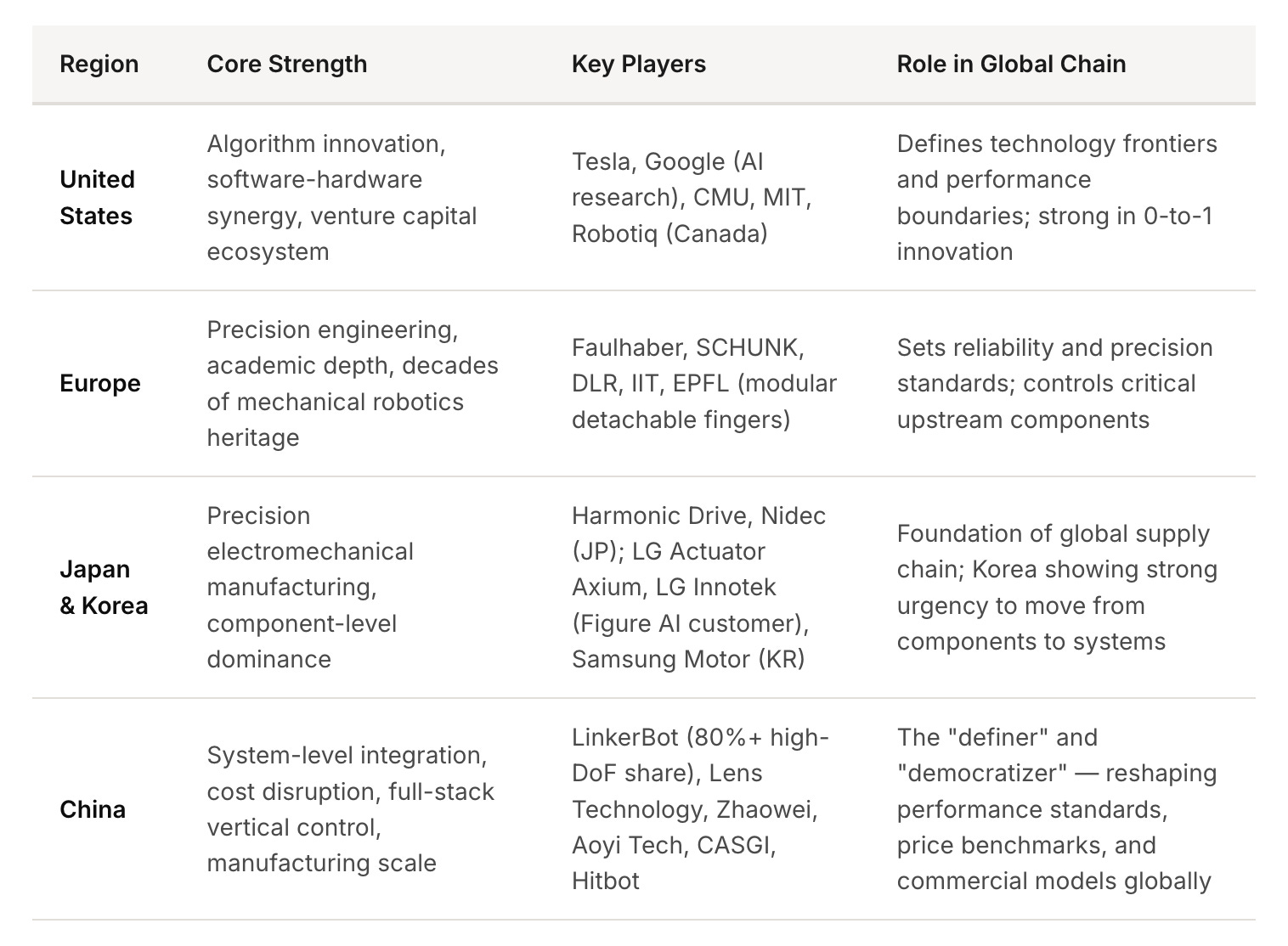
China’s advantage rests on four pillars: vertical integration (self-developed sensors, motors, and reducers), full technology route coverage (tendon, linkage, direct-drive all available), cost restructuring (turning lab luxuries into industrial necessities), and software-hardware synergy (proprietary AI manipulation algorithms integrated with hardware). As one industry report noted, China has the potential to replicate in dexterous hands what DJI achieved in consumer drones.”
Key Takeaways
China has seized the production lead — With 80%+ global share in high-DoF hands and the only company delivering 1,000+ units/month, China has moved from follower to market definer. The price gap (domestic ¥5,000-50,000 vs. imports ¥1M+) is a structural advantage.
The market is about to explode — From $123M (2024) to $5.8B (2031) at 65.9% CAGR, driven by humanoid robot scale-up, price compression, and supply chain maturation.
Technology routes are converging — After an early “Cambrian explosion,” the industry is aligning around electric motor + tendon/hybrid transmission + multi-modal tactile sensing as the mainstream stack. But differentiation in specific scenarios remains valuable.
The competitive battleground has shifted — From “whose specs are highest” to “who can deliver reliably at scale, at the lowest cost, and capture the largest order pipeline.” Batch delivery capability now matters more than prototype parameters.
Tactile sensing is the make-or-break technology — Without high-quality tactile feedback, dexterous hands cannot cross from demonstration to real-world deployment. This is both the biggest bottleneck and the highest-value opportunity.
AI algorithms are the emerging moat — As hardware designs converge, the ability to train robust, generalizable manipulation policies (imitation learning, reinforcement learning, sim-to-real transfer) is becoming the key differentiator.
5 Big thinking
FS Blog shares some perspectives on the power of “writing to think” - read it in full here and then go do some writing to think…(also holds useful hints for those with teenagers in the house)
https://fs.blog/writing-to-think/
Some Takeaways
“A few weeks ago, my 13-year-old son asked me why writing was so important. He wasn’t happy. One of his teachers had asked him to write an essay and he would rather use AI to generate it for him and be done with it.
The question seemed as natural to him as using a dishwasher is to us. If there is a better, more convenient way to do this, why not use it?
Today’s kids are growing up in a world where they can generate essays in seconds. Many employees are already using AI for a lot of simple tasks like email, catching up after vacation, summarizing meetings, and drafting PowerPoints. While some of these tasks might be accomplished more efficiently by ChatGPT than by human effort, I’d argue there are times when inefficiency is the point.
The reason they teach writing to kids in school is not to generate endless essays on history or books but to create a space to practice reasoning.
By delegating writing to AI, my son might be reducing his time spent doing homework. But he’s missing the chance to think more clearly about the topic at hand.”
“Writing forces you to slow down, focus your attention, and think deeply. In a world where attention is fragmented in seconds, thinking becomes more reactive than reasoned. Only when we have time to play with a problem can we hope to think about it substantially.
Writing requires sticking with something a little longer and developing a deeper understanding.
Mortimer Adler once said, “The person who says he knows what he thinks but cannot express it usually does not know what he thinks.”
“Writing is the process by which you realize that you do not understand what you are talking about.”
“Most organizations see PowerPoint and writing as interchangeable. They are not.
PowerPoint masks poor thinking. Just because presentations are easy to create doesn’t mean the person creating them understands what they are talking about. If my experience is any indication, about 30-40% of people giving presentations lack more than a surface-level knowledge of what they are presenting.
All the time spent making the presentation look good comes at the expense of wrestling with the problem and developing unique insights.
Pretty graphics don’t only drug the presenter, they also intoxicate the audience. When dressed up, even poor thinking can come off as well thought out. Writing avoids this because it strips away the fancy graphics.
Poor thinking has nowhere to hide. ”
“Sharing your understanding with the world allows you to not only test your thinking but gain the perspective of others.”
“Anyone who’s ever revised a piece of writing and done it well knows the pain of having to kill their darlings. But deleting, in writing and life, is a valuable tool. When you write, you develop an attachment to the text you produced only because you produced it.
Choosing to discard writing forces you to reconcile between what is true and what you wrote, which can lead to tremendous personal growth both in writing and in life. AI-generated text, on the other hand, is disposable by nature. It doesn’t force you to practice attachment and letting go.
The most important key on the keyboard and in life is often the one that deletes.
Deciding what to pay attention to and, more importantly, what to overlook and remove, is one of the most critical skills. Breaking a problem down into its essential elements and reassembling it from the ground up helps you to discern fact from opinion.
Wisdom is as much about knowing what to ignore as it is about what to pay attention to.”
“Practically speaking, writing forces you to take a complicated and ill-defined problem and compress it into something more manageable. This ‘compression’ is useful. Not only does it help you remember your ideas, but it helps you develop new ones.
Paul Graham put it this way: “A good writer doesn’t just think, and then write down what he thought, as a sort of transcript. A good writer will almost always discover new things in the process of writing.”
“When it comes to my kids, I told them, “one of the ways we learn to think for ourselves is to write out our thoughts.” When your invisible thoughts become visible, you are forced to wrestle with them in reality and not your imagination.
“But Dad,” they protested, as they continued to write in their summer journals, “it is so much easier to outsource to AI.”
They’re right. But they aren’t yet smart enough to see that in a world where intellectual labor is increasingly outsourced to tools, the human aptitude for clear thinking and unique insights will become all the more valuable.”
6 The Rent is Due

Have a Great weekend when You get to that stage,
Sune